What Is Custom Software? Benefits, Examples & Guide
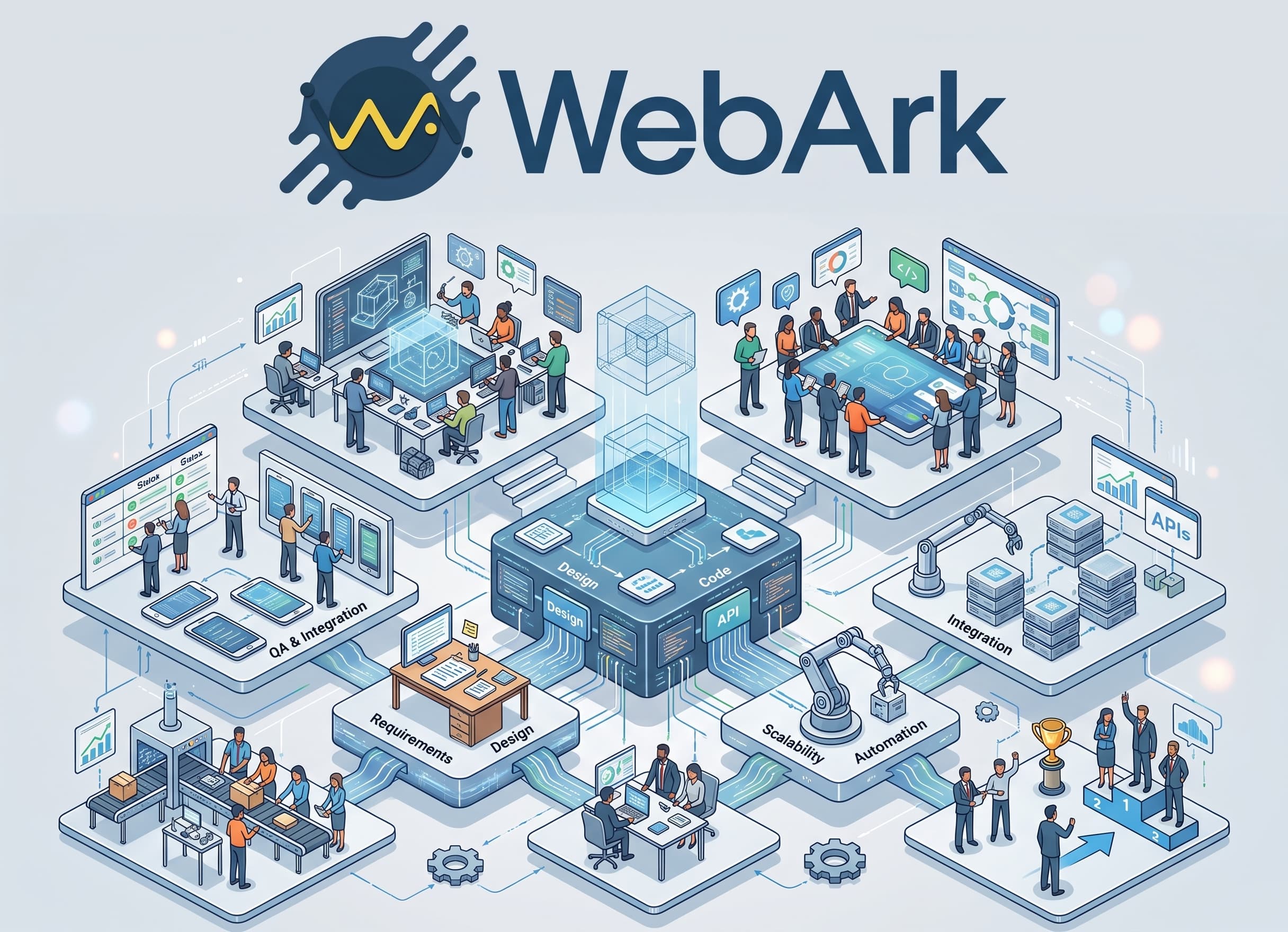
What Is Custom Software?
Every business has different processes, customers, challenges, and goals. Yet many businesses try to operate using the same software designed for thousands of other companies.
That is where custom software can make a difference.
Custom software is software specifically designed and developed to meet the unique requirements of a particular business, organization, or group of users. Instead of changing your business processes to fit a ready-made application, custom software is built around the way your business actually works. IBM describes custom software development as designing, creating, deploying, and maintaining software for a specific set of users, functions, or organizations.
For example, a company may need a system that combines customer management, inventory, approvals, reporting, employee workflows, payment processing, and mobile access in one platform. A standard software package may provide some of these capabilities, but a custom software solution can be designed specifically around the company's requirements.
In simple terms: Custom software is software built around your business, rather than forcing your business to work around software.
This is also the subject of our first WebArk software education Reel: “What Is Custom Software?”
Custom Software vs. Off-the-Shelf Software
One of the easiest ways to understand custom software is to compare it with off-the-shelf software.
Off-the-shelf software is developed for a broad market. It generally provides common features that many businesses can use.
- Accounting applications
- General CRM platforms
- Project management tools
- Email and collaboration software
- Generic inventory systems
- Standard e-commerce platforms
Custom software, on the other hand, is developed for a specific organization's requirements.
For example, imagine a logistics company that needs a system to manage:
- Vehicle allocation
- Driver assignments
- Route planning
- Delivery tracking
- Customer notifications
- Driver document verification
- Fuel records
- Invoice generation
- Management dashboards
Rather than using several disconnected applications, the company could develop one integrated platform designed around its operational workflow.
The important distinction is fit. Commercial software is designed to satisfy a wide range of customers, while custom software is designed around particular users, processes, and business objectives.
Why Do Businesses Need Custom Software?
Businesses often consider custom software when existing solutions cannot adequately support their processes.
A company may have unique workflows that cannot easily be configured in standard applications. Another business may need several systems to communicate with one another. A growing company may also need a platform that can evolve with its operations.
Common reasons for developing custom software include:
1. Unique Business Processes
Some businesses operate with highly specialized workflows. For example, a manufacturing company might require a software platform that connects production planning, raw-material management, quality control, warehouse operations, and reporting.
A standard application may not support these processes exactly as required. Custom development allows the system to reflect the organization's actual workflow.
2. Integration With Existing Systems
Many organizations already have multiple systems. A business may use one application for accounting, another for inventory, another for customer management, and another for internal operations.
Custom software can be designed to integrate these systems through APIs and other integration mechanisms.
3. Better Automation
Businesses frequently perform repetitive tasks manually.
For example:
Manual process
Customer submits request → Employee checks information → Manager approves → Employee updates spreadsheet → Customer receives notification.
A custom system could automate much of this:
Automated process
Customer submits request → System validates information → Workflow routes approval → Database updates → Customer receives notification.
The objective is not simply to create an application. The objective is to improve the business process.
4. Scalability
A business that is growing today may have completely different requirements in the future.
Modern application architectures can be designed to support changing workloads and business needs. Microsoft, for example, highlights cloud-native architecture, loosely coupled services, managed databases, DevOps, and monitoring as building blocks for modern applications.
A well-designed custom application can therefore be planned with future expansion in mind.
5. Better User Experience
Generic software often provides the same interface to every customer. Custom software can be designed for the specific users who will actually use the system.
For example, an employee may need a simple task screen, while a manager may need dashboards, reports, approvals, and analytics.
Instead of giving everyone the same interface, a custom platform can provide different experiences based on roles and responsibilities.
Examples of Custom Software
Custom software is not limited to one type of application.
A custom solution can be a web application, mobile application, desktop system, enterprise platform, cloud application, API platform, or a combination of several technologies.
Custom Web Applications
- Customer portals
- Employee management systems
- Booking platforms
- Inventory management systems
- E-commerce platforms
- Helpdesk systems
- Internal business dashboards
Custom Mobile Applications
Businesses may develop mobile applications for:
- Field staff
- Delivery teams
- Customers
- Sales representatives
- Healthcare workers
- Drivers
- Employees
Enterprise Software
Large organizations may require integrated enterprise applications covering areas such as:
- Human resources
- Procurement
- Finance
- Operations
- Asset management
- Customer management
- Workflow approvals
- Business intelligence
Industry-Specific Software
A business may also require software specifically designed for its industry.
- Logistics management systems
- Tourism management platforms
- Healthcare applications
- Manufacturing systems
- Real-estate platforms
- Education management systems
- Financial workflow applications
The key idea is that the system is designed around the organization's requirements rather than being a generic product.
What Is the Custom Software Development Process?
Developing custom software is more than simply writing code.
A professional development process normally involves understanding requirements, designing the system, implementing it, testing it, deploying it, and maintaining it.
NIST defines the software development life cycle as a formal or informal methodology for designing, creating, and maintaining software.
A typical custom software development process can include the following stages.
1. Business & Requirement Analysis
The first step is understanding the business problem.
Questions may include:
- What problem are we trying to solve?
- Who will use the system?
- What are the current workflows?
- What information needs to be stored?
- Which systems need integration?
- What reports are required?
- What security requirements exist?
At WebArk, this stage is critical because the goal is to understand the business requirement before choosing the technology.
2. Software Architecture & Planning
The development team then determines how the application should be structured.
This may involve decisions around:
- Frontend technology
- Backend architecture
- Database design
- APIs
- Cloud infrastructure
- Authentication
- Security
- Integrations
- Scalability
3. UI/UX Design
Before development, the user experience and interface can be designed and validated.
This helps stakeholders understand how the application will work before significant development effort is spent.
4. Software Development
Developers then transform the approved requirements and designs into working software.Depending on the project, the solution could involve technologies such as web frameworks, mobile frameworks, databases, APIs, cloud infrastructure, and third-party services.
5. Testing & Quality Assurance
Software needs to be tested before release.
Testing may cover:
- Functional testing
- Integration testing
- Performance testing
- Security testing
- Usability testing
- Mobile/device testing
- Regression testing
6. Deployment
Once the application has passed the necessary testing, it can be deployed to production infrastructure.
Modern development practices can also use automated build, testing, deployment, and monitoring processes. IBM notes that DevOps and CI/CD practices can support frequent, automated software delivery.
7. Maintenance & Continuous Improvement
Software development does not necessarily end when the first version is released.
Businesses may need:
- Security updates
- Bug fixes
- Performance improvements
- New features
- Integrations
- Reporting enhancements
- Infrastructure upgrades
A custom software platform can continue evolving as the business evolves.
What Are the Benefits of Custom Software?
The biggest benefit of custom software is alignment with the business.
Some common benefits include:
Better Business Fit
The application is designed around the organization's actual requirements.
Greater Automation
Manual and repetitive processes can be converted into digital workflows.
Improved Integration
Different systems and data sources can be connected into one operational ecosystem.
Scalability
The solution can be architected with future users, features, integrations, and workloads in mind.
Better Visibility
Dashboards and reports can provide management with centralized information for decision-making.
Improved Customer Experience
Customer-facing applications can be designed around the specific journey and services the business provides.
Competitive Advantage
A business can build unique digital capabilities that may not exist in generic software products.
Is Custom Software More Expensive?
Custom software development can require a larger initial investment than purchasing an existing subscription-based application.
However, comparing only the initial price can be misleading.
The more useful question is:
“What will this software cost the business over its entire lifecycle, and what value will it create?”
For some businesses, an off-the-shelf solution is the most practical choice.
For others, limitations, manual work, multiple subscriptions, disconnected systems, inefficient processes, or lack of scalability can make a custom solution more valuable over time.
The right decision depends on the business problem, requirements, budget, timeline, and expected return on investment.
When Should Your Business Consider Custom Software?
Custom software may be worth considering when:
- Your business has unique processes.
- Existing software does not meet your requirements.
- Employees are performing significant manual work.
- Multiple systems need to be integrated.
- You need a highly specialized customer portal or application.
- Your organization needs a centralized business platform.
- Existing software cannot scale with your growth.
- You need workflows specifically designed for your organization.
- Your software requirements provide a competitive advantage.
However, not every business needs custom software.
Sometimes an existing SaaS product is perfectly suitable. A professional software consultation should therefore begin with the business problem rather than automatically recommending custom development.
Custom Software Is More Than an Application
A common misconception is that custom software simply means “building an app.”
In reality, a successful software project can involve much more:
Business requirements → Processes → UX/UI → Architecture → Development → Integrations → Security → Testing → Deployment → Monitoring → Continuous improvement
That is why businesses should think of software as part of their overall digital ecosystem, not just a collection of screens and buttons.
The objective should be to create technology that supports business operations, improves efficiency, and provides measurable value.
How WebArk Approaches Custom Software Development
At WebArk, our approach starts with understanding the business problem.
We work with businesses to transform ideas, operational challenges, and manual processes into practical digital solutions.
Our software development capabilities can include:
- Custom web application development
- Mobile application development
- Enterprise software development
- API development and system integration
- Business management systems
- Custom dashboards and reporting platforms
- Cloud-based applications
- Software modernization
- Software consulting
Our focus is not simply on delivering software.
We aim to build software that supports the way your business operates and grows.
From Business Idea to Working Software
Perhaps you have an idea for a software product.
Perhaps your employees are still using spreadsheets for an important business process.
Perhaps your company is using several disconnected systems.
Or perhaps you have already identified a problem but do not know what technology should be used to solve it.
The first step does not have to be writing code.
The first step is understanding the problem.
From there, the right software architecture, technology, workflow, and development strategy can be selected.
That is the real purpose of custom software development.
Final Thoughts
So, what is custom software?
Custom software is a digital solution designed and developed specifically around the needs of a particular business, organization, or group of users.
Unlike generic software, custom software can be built around unique workflows, integrations, user requirements, and long-term business objectives.
The right question is not:
“Do we need custom software?”
A better question is:
“What business problem are we trying to solve, and what is the best technology solution for it?”
At WebArk, we believe good software begins with a clear understanding of the business.
Your software ideas, built to reality.
Frequently Asked Questions
What is custom software?
Custom software is software specifically designed and developed to meet the requirements of a particular organization, business, or group of users rather than a broad market.
What is the difference between custom software and off-the-shelf software?
Off-the-shelf software is created for many customers and usually provides standardized features. Custom software is developed around the requirements, workflows, and objectives of a specific organization.
Is custom software only for large companies?
No. Startups, small businesses, medium-sized companies, and large enterprises can all use custom software when their requirements justify it.
How long does custom software development take?
The timeline depends on the project's scope, complexity, integrations, number of users, technology requirements, testing requirements, and development approach. A small application may take considerably less time than a large enterprise platform.
How much does custom software cost?
There is no single fixed price. The cost depends on factors such as functionality, integrations, UI/UX requirements, technology stack, security, infrastructure, testing, and ongoing maintenance.
Should every business build custom software?
No. In many cases, an existing software product may be more appropriate. Custom software makes more sense when unique requirements, integrations, automation needs, scalability, or business differentiation justify development.
Recommended Reading & References
References,
- IBM — What Is Software Development? - https://www.ibm.com/think/topics/software-development
- NIST — Software Development Life Cycle (SDLC) - https://csrc.nist.gov/glossary/term/software_development_life_cycle
- Microsoft Azure — Modern Application Development - https://azure.microsoft.com/en-us/solutions/modern-application-development
- AWS Builder Center — Custom Software Development for Startups - https://builder.aws.com/content/3899t5mvNSESAYtNQaNR0qcDPXQ/custom-software-development-for-startups-or-cost-and-benefits
Have a Software Idea?
Turn your business idea, manual process, or digital challenge into a practical software solution.
Talk to WebArk about your software project → /contact
WebArk Software Development - Your software ideas, built to reality.
